9 Sensory Trips for Couples to Spark Connection
If we only use our logical minds to plan and experience couples travel, we’re missing out on an important piece.
Nervous system health — how safe, regulated, and open we feel — is critically important to traveling easier as a couple.
Sure, we can plan the perfect itinerary, book the perfectly-timed flights, and choose the right hotel, but if our nervous system is still in overdrive, it’s hard to land and travel with presence.
For many couples, the real spark doesn’t come from grand gestures or fancy dinners.
It’s more like a shared sensory experience: something that quiets the mind and wakes the body’s natural rhythm for closeness, laughter, and love.
The Science of Connection: Love Maps, Rituals, and Regulation
In the Gottman Method, John and Julie Gottman talk about Love Maps and Shared Rituals of Connection.
A Love Map is how well you know your partner’s inner world: their likes, dislikes, dreams, and daily stressors.
Rituals of Connection are the small, consistent acts that keep you emotionally and physically close.
Healthy relationships aren’t just knowing things about each other, they’re about staying curious about each other’s inner worlds.
Over time, this curiosity creates rituals of connection — shared, often-daily habits that act like glue for the nervous system and relationship.
A ritual can be big (a Friday morning coffee date before work) or small (touching hands at stoplights). Each one tells the nervous system, I’m safe here.
When these rituals travel with us or are reawakened through sensory experience, they deepen our bond.
Every new place becomes a chance to rediscover each other’s rhythms — to update your Love Map with who your partner is now, not just who they were when you first met.
Every sensory ritual: how you move through heat, silence, or awe, becomes a new entry in your shared story.
Neuroscience supports this, too.
The vagus nerve, which controls our social engagement system, helps us feel safe through rhythm, breath, eye contact, and touch.
When couples co-regulate (syncing nervous systems through shared sensory experience), the body exits fight-or-flight and enters rest and connection.
Travel, when done intentionally, gives us endless opportunities for this kind of nervous system toning.
New settings invite new ways to co-regulate — through temperature, rhythm, movement, silence, or awe. They also expose the edges of our nervous system.
So instead of approaching travel as escape, what if we approached it as practice?
A way to re-learn the body’s language of love, through heat, water, texture, sound, and presence.
Below are nine sensory destinations designed for connection through shared experience.
Each one is a love map in motion: a journey back to the body, and to each other.
1. Heat and Surrender ~ Temazcal, Oaxaca, Mexico
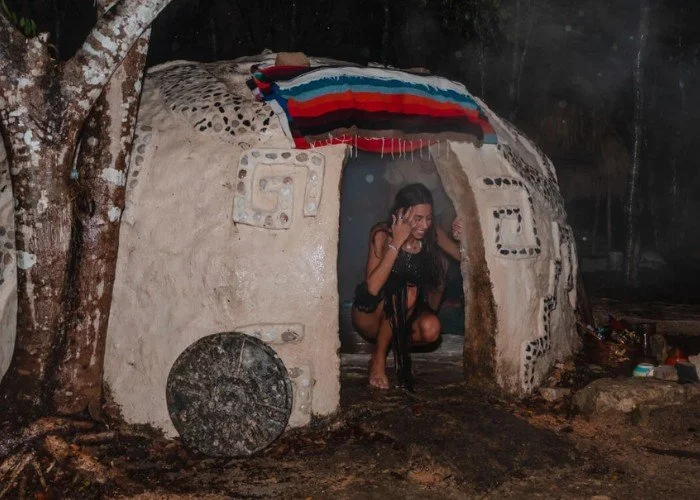
In the hills of Oaxaca, a temazcal ceremony begins with a crawl through a small stone doorway into heat and darkness.
Go with: Temazcal Colibrí Dorado - a sweet and grounded (and easily accessible via Didi from Oaxaca Centro). The couple who owns and runs the sauna and ceremony are brilliant, gentle, and so good at what they do.
The stone sauna smells like eucalyptus and lavender. The air is thick, hot and humid. We drink rounds of electrolytes and bitters between chants in Spanish honoring mother Earth, the land, and our ancestors.
Steam rises from volcanic rock as Aleyda beats the drum, and your body answers in sweat and release.
Temazcal, meaning “house of heat,” was once used by the Aztecs for purification — physically, emotionally, and spiritually.
The use today remains the same.
Being present, noticing our body, our senses and our limits. The temazcal was difficult physically, but felt completely restoring. We gave thanks and asked for forgiveness and clarity.
Temazcal has always been physical, emotional, spiritual. The work is in presence. You don’t push through; you soften into it.
In Gottman’s language, this is the beginning of a shared ritual: entering the same space, facing intensity together, and learning how the other person moves through it.
It’s not about comfort, it’s about curiosity. How does your partner meet the heat? What does surrender look like on their face? What happens when you let go, side by side?
The ceremony asks: Can you stay with your body (and maybe your partner) when discomfort arises?
Shared Reflection:
How do I respond when discomfort rises between us?
What helps me stay present instead of shut down?
How do I respond when my body meets heat and intensity?
In this shared space, what does surrender look like?
How does discomfort soften when it’s witnessed?
Sensory Practice:
After the ceremony, step outside and let cool air meet damp skin. Sit quietly with your partner or self, sipping water or electrolytes slowly. Feel your heartbeat steady, feel the night breeze or bright sun on your face, and notice, beneath exhaustion, a small, steady clarity.
2. Water as Regulation ~ Kirkham Hot Springs, Idaho
At Kirkham Hot Springs, near Lowman, Idaho, the natural pools spill over a rocky hillside into the cold current of the Payette River.
It’s one of the rare places where you can easily move between hot mineral water to icy mountain runoff, and its completely natural.
Regulation in relationships isn’t constant calm — it’s all in the ability to move between stress and safety and find your way back to each other.
Love Maps grow through noticing. Seeing what soothes your partner, what overwhelms them, what temperature they crave.
The water teaches this. You sink into warmth, muscles unclench, breath deepens. Then you step into cold, breath catches, and laughter bubbles up. The river rushes beside you — wild, uncontained — reminding you that stillness and movement can coexist.
The rushing river beside you is like a reminder: movement and stillness can coexist. So can you and your partner, even when emotions run high.
After a while, couples can begin to mirror each other without noticing: matching tone, pace, rhythm. It’s co-regulation in real time.
Sensory Reflection:
When you entered the water, what part of your body relaxed first?
Can you feel the difference between holding tension and being held by warmth?
What sensations bring me back to balance?
What does my partner reach for when they need grounding?
If your relationship were a temperature, what would it be right now — and what might bring it closer to balance?
Shared Ritual:
Alternate between hot and cold together. Match your breathing. When you return home, recreate it with contrast: a warm bath, a cold rinse, shared laughter. Let it become your own ritual for balance.
3. Touch and Thermal Rhythm ~ Strawberry Park Hot Springs, Colorado
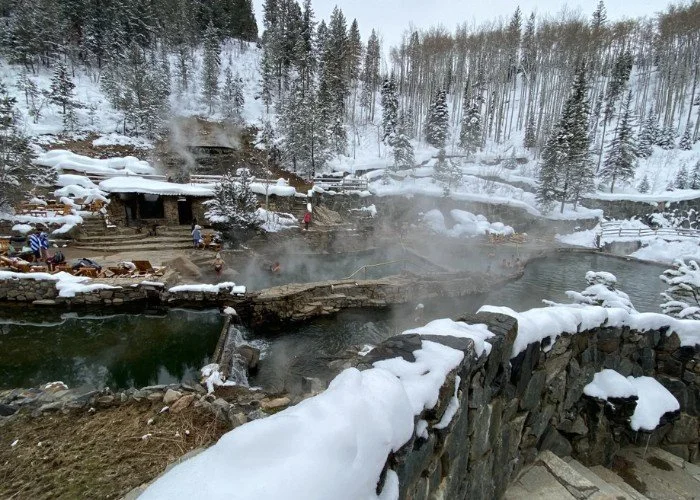
At Strawberry Park Hot Springs in Steamboat Springs, Colorado, the body remembers what safety feels like: warmth, weightlessness, quiet.
The mineral water holds you steady, while the cold mountain air brushes across your skin- two opposing sensations creating balance.
The Gottman Institute calls this emotional attunement: staying responsive to each other’s signals instead of pulling away when things feel off.
Love Maps deepen when we witness our partner’s physical ease, the way they sigh, float, soften. Touch becomes intuitive. The nervous system reads the rhythm as safety.
In warm water, attunement becomes physical. You watch your partner’s face soften. You match your breathing. The nervous system reads that synchronization as safety.
From a regulation standpoint, hot springs are pure co-regulation. Heat dilates blood vessels, heart rate slows, and the vagus nerve, the body’s internal “calm switch,” activates.
Here, communication happens through the body first. The warmth does the talking.
After the soak, there’s often a sense of calm — a quiet awareness that the water didn’t fix anything, but it softened what was rigid enough to begin the work.
Sensory Reflection:
When did your body first notice it could rest?
How does shared stillness change my sense of closeness?
What happens when we let the body lead instead of the mind?
How does warmth change the way you listen to your partner
What happens in your relationship when you allow slowness instead of urgency?
Shared Ritual:
Find a moment of physical syncing each week: a shared walk holding hands, a slow hug, even lying back-to-back before sleep. It’s not about conversation, it’s about remembering what safety feels like, together.
4. Forest Bathing ~ Hoh Rain Forest, Washington
The Hoh Rain Forest in Olympic National Park is a cathedral of green. Every surface is alive- moss draping branches, ferns unfurling in the mist, cedar scent heavy in the air.
“Forest bathing,” a Japanese practice called shinrin-yoku, simply means immersing your senses in the forest. It’s not a hike; it’s a sensory meditation.
Walking side by side here slows everything down. Each footstep on wet soil provides gentle bilateral movement- one of the most natural ways to calm the body.
Even the scent of cedar and damp flora can lower cortisol.
This is what Gottman means by shared rituals: experiences that build intimacy through rhythm and routine. Maybe it’s the way you both stop at the same sight, or share a thermos of tea in silence.
For couples, this is intimacy through quiet presence. No talking required. Just walking, listening to breath and birdsong.
Reflection prompts:
What sensations ground me most quickly?
How does moving slowly with my partner change our rhythm?
What is easy or hard about co-regulation with my partner?
What does silence reveal between us?
Shared Ritual:
Find a nearby park or wooded path at home. Walk slowly without talking for ten minutes. Let your senses guide you: find bugs and rocks, touch bark, smell rain, listen for sounds. You’ll be surprised how much you “hear” from each other in the quiet.
5. Silence and Awe ~ Big Sur, California
Driving the cliffs of Big Sur, the Pacific opens beside you.
The air smells like salt and pine. Below the highway, waves crash against the rocks.
You can pull over anywhere along Highway 1 and feel it: that quiet awe that humbles the body and rearranges the nervous system.
The real experience happens in the stillness. When the fog rolls in, it asks you to pause. When the wind rises, it clears what’s stale.
Awe does something remarkable to the nervous system. It widens our perspective, softens self-focus, and creates a shared sense of wonder.
When we stand in awe, we stop scanning for threat. We feel safe enough to belong again.For couples, Big Sur is an invitation to communicate without speaking, to let beauty do the talking.
Sometimes the best repair isn’t a conversation, it’s standing side by side, looking out at something larger than you. It’s remembering we’re on the same team, facing the same horizon.
Reflection prompts:
When was the last time you felt awe together?
What happens in your body when words fall away?
How does shared quiet change the way you experience love?
What happens when I stop filling space with words?
Where do I feel awe in my body?
Sensory practice:
Find a viewpoint, maybe near McWay Falls or the cliffs by Garrapata. Stand together in silence for at least two minutes. Notice color, texture, wind, sound. Feel your partner’s presence beside you without needing to turn toward them. Let awe regulate you — not by solving anything, but by reminding you how small and sacred it all is.
6. Touch and Texture ~ Taos, New Mexico
In Taos, New Mexico, the landscape is alive with texture- adobe walls warm from the sun, red clay paths, woven blankets in ochre and turquoise.
The air smells like sage and wood smoke. Everything here invites you to slow down and feel.
Stay in an adobe casita or artist’s loft near Arroyo Seco or Taos Pueblo. Mornings are quiet, light spilling across the walls, coffee in handmade mugs.
Connection here is in the brush of a hand, kneading bread, or tracing the edge of a pottery bowl.
In Gottman’s terms, this is turning toward: noticing small bids for connection and answering them.
The tactile world of Taos makes that natural. Texture brings you back to the body, grounding you in presence.
Reflection prompts:
What does “creating together” awaken in us?
What colors and textures make you feel most at ease?
How do you reach for your partner when you need grounding?
How does working with texture calm or excite me?
What rhythm do I notice in my partner’s movements?
Sensory practice:
Shape something with your hands. Let it be imperfect. When you bring it home, let it serve as a reminder of what grounded creation feels like.
7. Cold and Breath ~ Glacier National Park, Montana
The cold here is alive. Lakes carved by ice shimmer turquoise under vast skies.
A cold plunge, even if just a brief dip, activates the body’s survival reflex and then its recovery system. It’s a nervous system reset that you have total control over.
When done consciously, it strengthens trust and regulation. You enter the shock together, you breathe through it, you come out laughing.
The Gottman Institute might call this a “shared stress-reducing conversation,” but in the language of the body, it’s simply resilience together.
The experience of a cold plunge can also be added to your Love Maps as a difficult but worthy experience you look back at fondly.
Reflection prompts:
What emotions rise when I meet discomfort?
How do I trust my partner when I’m out of control?
What changes in us after we face something cold or difficult, side by side?
Sensory practice:
Step into the water slowly. Notice breath. When you emerge, wrap up together in the same towel. Feel warmth return — earned, shared, alive.
8. Plant Medicine and Attunement ~ Costa Rica
In the lush mountains of Costa Rica, the air hums with life: rain, jungle, ocean, and breath.
Plant medicine retreats here are about returning to self, body and Earth. Whether through mushrooms, cacao, Ayahuasca, or guided somatic work, the focus is on presence: meeting yourself and your partner with unfiltered honesty.
Couples arrive seeking clarity and leave with something quieter: attunement.
Under guidance, these retreats help slow the mind and open the senses, creating space for emotional repair, what Gottman might call building love maps, rediscovering each other’s inner worlds with curiosity instead of control.
From a nervous system perspective, expansion isn’t about chasing intensity, it’s about widening capacity to feel, to stay, to trust.
The lush jungle mirrors that truth: wild, rooted, and alive with rhythm.
Reflection prompts:
What truths emerge when you slow down enough to listen?
How does your body signal safety, openness, or resistance?
What does expansion look like in your relationship right now?
Sensory practice:
After a ceremony or integration session, sit outside together. Feel the humidity on your skin, the sound of insects in chorus, the sweetness of fruit or cacao on your tongue. Let silence do the weaving.
For curated, ethically led experiences, explore Retreat Guru’s Costa Rica Plant Medicine listings to find facilitators and retreats aligned with your intentions.
Here are a few recs:
Soltara Healing Center: Guided by Peruvian Shipibo Healers, this center in Costa Rica offers plant-medicine retreats with full integration support. Soltara
New Life Rising: A trauma-informed ayahuasca retreat with intimate group settings, focused on authenticity and couples or partners wanting deeper connection. New Life Rising - Ayahuasca Retreat
Posada Natura: A rainforest-based sanctuary offering 7-day plant-medicine retreats, with riverfront accommodations and intensive integration work. Posada Natura
9. Rhythm and Release ~ Thai Massage, Thailand

On the soft limestone coast of Railay Beach in the southern islands of Thailand, where longtail boats hum across turquoise water and limestone cliffs rise like sentinels, touch becomes language.
Here, Thai massage isn’t a spa indulgence- it’s a slow experience in movement, breath, and trust.
The body is stretched, rocked, and pressed with rhythmic precision, echoing the ocean’s own pulse.
Go with any of the open-air massage pavilions near the walking street or up onto the beach area where you can hear the sea as you’re massaged.
Traditional Thai massage, or nuad bo-rarn, blends acupressure and assisted stretching, designed to open the body’s energy lines (sen). It’s about relaxation and relationship — between breath and body, giver and receiver, tension and surrender.
In Gottman’s terms, this is attunement through rhythm: sensing your partner’s micro-signals — a sigh, a wince, a shift — and adjusting gently.
Neuroscience calls this co-regulation through touch. When one partner’s nervous system relaxes, the other often follows. The body learns again that safety is mutual.
Reflection prompts:
How does my body respond when I’m guided instead of in control?
What happens when I let someone else set the rhythm?
Where does release feel most tender, and most freeing?
Sensory practice:
After your massage, swim around Tup Island from Railay Beach. Feel salt on your skin, the slow pull of the tide, the glow of muscles unwound. Let your bodies sway with the water’s rhythm: no words, just breath syncing to waves.
Integration: Bringing the Senses Home
The most meaningful trips don’t end when you unpack.
They live quietly in the body’s sensory memory. In the scent of cedar, the smell of the ocean, the taste of salt, mango, curry, the heat on your skin.
Travel, when it’s intentional, becomes a kind of nervous system treat: a stored sense of calm you can return to later.
These sensory memories add to our Love Maps — embodied reminders of how it feels to be alive together and how both of us experience the world together.
When life gets busy or tension creeps in, these stored sensations act like spark plugs for intimacy.
Each sensory experience: heat, water, silence, texture, becomes a marker of safety between you. When life gets busy or conflict surfaces, these memories act like muscle memory for love.
They remind our nervous system what calm, trust, and presence feel like. They remind our body what “us” feels like.
You can recreate these rituals of co-regulation that bring the sensory world back into daily life:
Run a bath together, adding eucalyptus or lavender oil.
Walk slowly through your neighborhood like it’s a forest- noticing sound, temperature, rhythm.
Sip the tea you had by contacting the place and buying it or something that has the same herbs.
Cook barefoot, focusing on texture and scent rather than outcome.
Sit in silence, breathing together for the length of one song.
These small sensory moments aren’t just soothing, they’re relational glue. They rebuild what the nervous system calls safety cues: signals that tell your body “I’m not alone.”
It’s easy to think love deepens through words, but often repair happens beneath them: in the shared experience, your breath, the way you both look up at the same sky.
Closing Reflection
Before you plan your next couples trip, don’t just ask Where should we go? Ask instead: What do we want to feel?
Do we need heat or cool, stillness or movement, silence or awe? Do we need to soften, to breathe, to remember what safety feels like again?
Because the best couples vacations aren’t escapes, they’re homecomings. Returns to body, to self, and to each other.
And when travel becomes that, every place you go becomes a reminder that connection is everywhere.
If this post sparked something for you — maybe a sense of presence, or the reminder that travel is about how we feel, not just where we go — you’ll love Travel Talk.
It’s a free guide with 125+ conversation prompts and tools to help you and your partner connect before, during, and after your trips.
[Grab it here → Travel Talk: A Guide to Radically Aligned Couples Travel]